The Confederation of Indian Textile Industry (CITI) has signed an MoU with the International Cotton Advisory Committee (ICAC) and technology company Merago Inc. to develop carbon credit projects based on regenerative agricultural practices. The initiative is designed to advance sustainable cotton production in India while enabling cotton farmers to earn additional income through carbon credit generation.
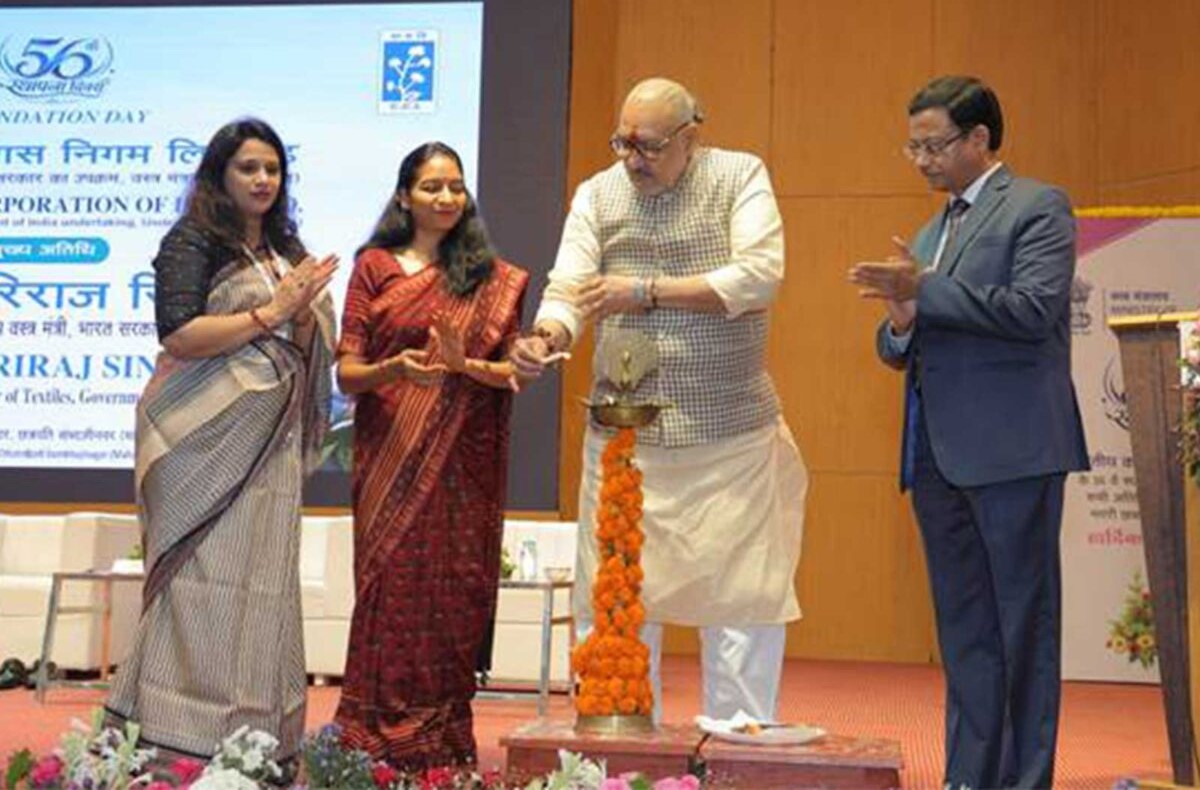
The MoU was exchanged during the 56th Foundation Day celebrations of the Cotton Corporation of India on August 1, in the presence of Union Textiles Minister Shri Giriraj Singh and senior Maharashtra government ministers Shri Sanjay Shirsat, Shri Sanjay Savkare, and Shri Atul Save. Union Textiles Ministry Joint Secretary (Fibre) Ms Padmini Singla, Textile Commissioner Ms Vrunda Manohar Desai and Cotton Corporation of India CMD Shri Lalit Kumar Gupta were also present at the occasion.
CITI Chairman Shri Ashwin Chandran said, “At CITI, it has always been about industry plus farmer. Our collaboration with the International Cotton Advisory Committee and Merago reflects that philosophy by strengthening sustainability in the Indian textile and apparel ecosystem and creating additional income opportunities for farmers.”
“Given the increasing focus on sustainability worldwide, the CITI-ICAC-Merago tie-up will also increase the global competitiveness of India’s textile and apparel industry by lowering the carbon footprint of India’s cotton arena,” Shri Chandran pointed out.
Under the partnership, ICAC will serve as the principal technical knowledge partner, providing agricultural expertise, technology, training, and technical support. Cotton farmers associated with CITI-Cotton Development Research Association (CITI CDRA) and its affiliated partners will adopt regenerative practices to improve soil health and increase carbon sequestration. These practices will include producing biochar and compost from agricultural biomass and applying them to cotton fields. Merago will provide the digital technology platform for project implementation and oversee carbon asset management, while CITI CDRA will lead project execution and farmer engagement.
Carbon credits generated under the project will be developed, verified and transferred in accordance with Article 6 of the Paris Agreement, India’s applicable laws and carbon market regulations. Verified emission reductions and removals will be recorded in the national carbon registry before their issuance, transfer or commercialisation.
Subject to regulatory approvals, a designated share of the verified carbon removals will be certified as transferable carbon credits for sale in domestic and international carbon markets. Merago will manage the commercialisation of carbon credits and distribute the proceeds among CITI, ICAC and participating farmers in line with the agreed revenue-sharing framework.
India’s textile and apparel sector is the country’s second-largest livelihood generator after agriculture. India aims to create a $350 billion textile and apparel industry by 2030, including $100 billion in exports.