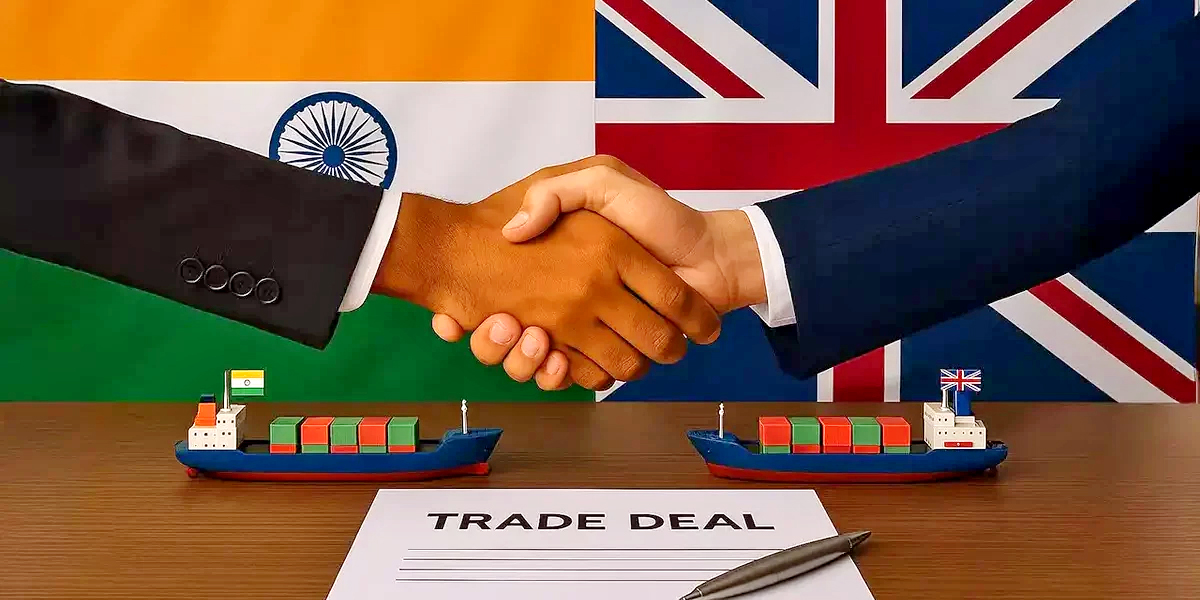
The Indian textile industry expects to double its market share in the UK as the recently concluded free trade agreement exempts Indian textiles and apparel from UK’s safeguard duties, bringing tariffs down to zero from about 12 per cent, said industry associations.
India, which is the fourth largest textile exporter to the UK, has a 6.6 per cent market share as of 2025, and majority exports (66%) comprise ready-made garments, according to government data. In 2024-25, exports to the UK were $1.3 billion. Among other items exported include cotton textiles, handicrafts, carpets etc.
“The FTA is a game changer for us. For years, we have been at a disadvantage compared to countries such as Bangladesh, which enjoyed preferential market access. The agreement finally creates a level playing field. With landed prices now at par, we believe our market share has the potential to double to at least 12 percent over the coming years,” said Prabhu Damodaran, convenor and secretary of the Indian Texpreneurs Federation (ITF).
The UK Department for Business and Trade has estimated that the FTA will boost imports from India by about £2.9 billion. Imports of clothing are projected to rise by £475 million (45%), textiles by £175 million (40%), and footwear by £55 million (30%).
“There would be an incremental business of 10-15 per cent with the FTA and our capacities are sufficient to absorb the additional orders. With more market share, the exporters may increase the capacities over a period of time. The engagement with UK brands like Primark has been active over the past one year and they are keen to work with Indian exporters as we are not dependent on any external supplier for raw materials unlike exporters from Bangladesh,” Damodaran added.
ICRA expects India’s textile exports to the UK to grow by ~13% CAGR over the next five years post this development.
Meanwhile, brokerage ICICI Securities said in a June 18 note that India’s low labour costs, abundant cotton availability, and recent removal of customs duty on cotton imports further strengthen its cost competitiveness. Large, integrated textile players with strong quality standards are expected to be key beneficiaries. The brokerage further added that benefits from the UK FTA are likely to start accruing from FY27, while the impact of the EU FTA should be visible from FY28.
Commenting on the FTA, Rahul Mehta, chief mentor of Clothing Manufacturers Association of India (CMAI) said, “UK itself is not a large market as European Union or the United States, so any additional market access will remain limited. Nevertheless, every little bit counts and the FTA opens up another market for India apparel exporters.”